Enterprise Construction
WINRATE
A multi-agent system that automates the entire RFP response process: from requirement extraction to proposal generation to compliance review.
Industry
Construction
Timeline
8 weeks
Key Metric
85%
Result
Faster RFP Response
The Challenge: Manual RFP Hell
The client was spending 3-4 days on every RFP response. Their team of estimators and proposal writers were drowning in repetitive work: pulling past project data, researching competitor pricing, writing boilerplate sections, and cross-checking compliance requirements.
They were winning less than 15% of bids, not because their proposals were bad, but because they couldn't respond fast enough. By the time they finished one proposal, three more had come in.
The existing process involved 6 different spreadsheets, 3 different document repositories, and zero automation. Every proposal was built from scratch.
The Solution: Coordinated AI Agents
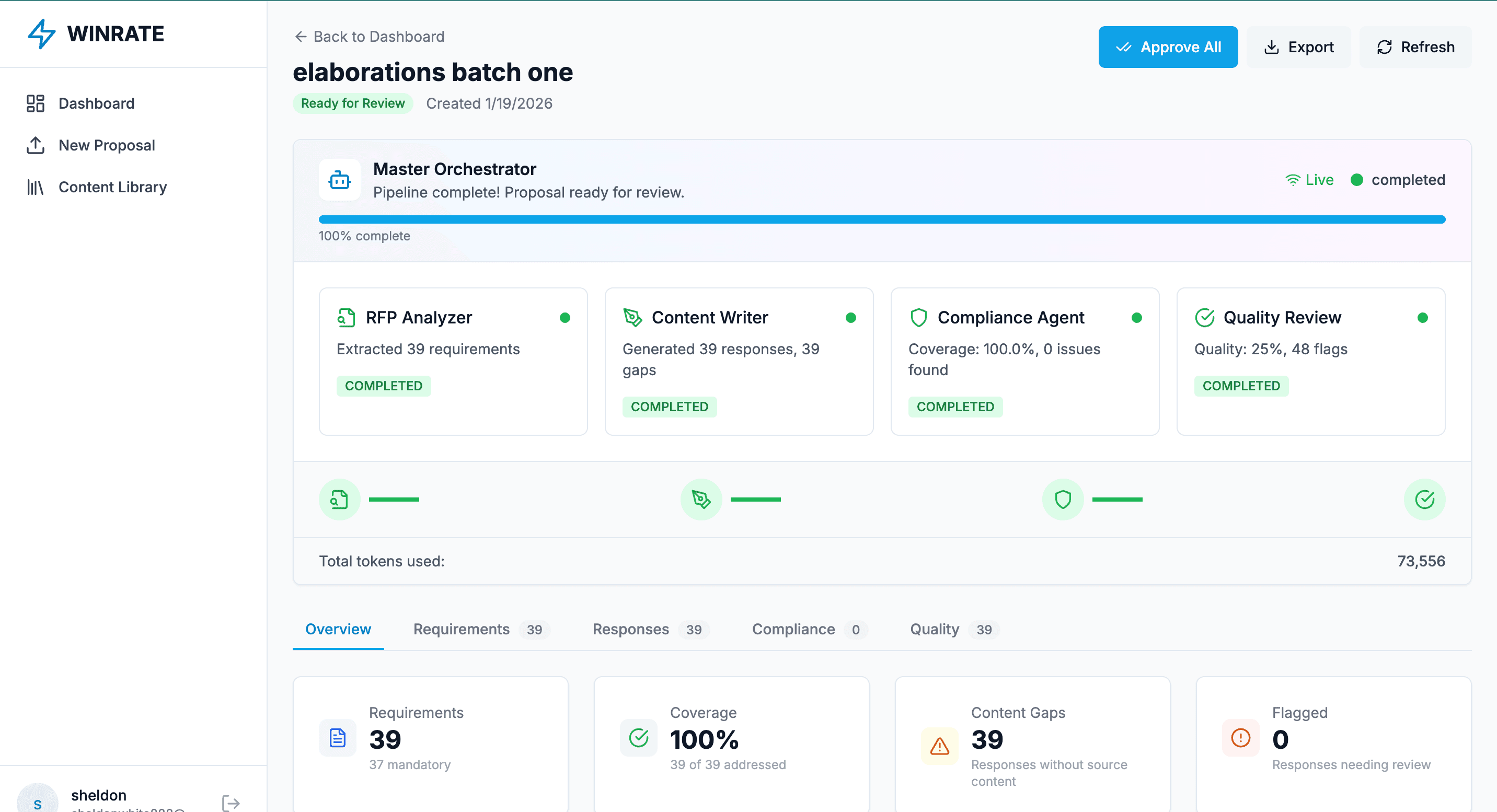
We built WINRATE, a system of specialized AI agents that work together to handle the entire RFP lifecycle. Each agent owns a specific capability and coordinates with others through a central orchestration layer.
Requirement Extraction Agent: Parses RFP documents, identifies requirements, and creates structured checklists
Research Agent: Searches past proposals, project databases, and competitive intelligence
Writing Agent: Generates proposal sections based on requirements and research
Compliance Agent: Reviews drafts against requirements and flags missing items
Pricing Agent: Pulls historical pricing data and suggests competitive bids
How Context Graphs Power WINRATE
WINRATE isn't just LLMs generating text. It's a context graph that understands how this specific construction company wins bids. Every past proposal, every pricing decision, every client preference is captured and queryable.
Three-Tier Context in Action
When WINRATE processes an RFP, it assembles context from three tiers to give agents full operational awareness.
Live Context
Real-time data about current state
- →Current resource availability and crew schedules
- →Active projects and their status
- →Recent pricing from suppliers
Cached Context
Pre-computed aggregates for fast retrieval
- →Win rates by client type and project category
- →Historical pricing baselines by region
- →Average margin profiles by job complexity
Derived Context
Patterns extracted from historical decisions
- →What language resonates with different utility clients
- →Which technical approaches won similar bids
- →Lessons learned from lost proposals
Precedent Search in Action
When the Pricing Agent needs to suggest a competitive bid, it doesn't guess. It searches precedent.
Example Query
"Find proposals for utility site restoration jobs in the Tampa region from the past 18 months. Show me winning bids, their pricing structure, and any client feedback that influenced future proposals." → Returns 12 relevant precedents with full decision traces.
The Results
RFP Response Time
Win Rate
Proposals Submitted
Beyond the Numbers
- ✓Estimators now focus on high-value strategic decisions instead of data gathering
- ✓Consistent proposal quality across all submissions
- ✓Real-time visibility into proposal pipeline and bottlenecks
Tech Stack
Have a similar challenge?
Let's talk about how we can help transform your operations.